
By the early 1980s, K-Paul’s Louisiana Kitchen had taken the food world by storm.
Diners lined up down Chartres Street, and out-of-town critics joined locals in pursuit of something unforgettable: flavor unlike anything else in America — bold, layered, and alive in a way that made people set down their forks just to talk about it.
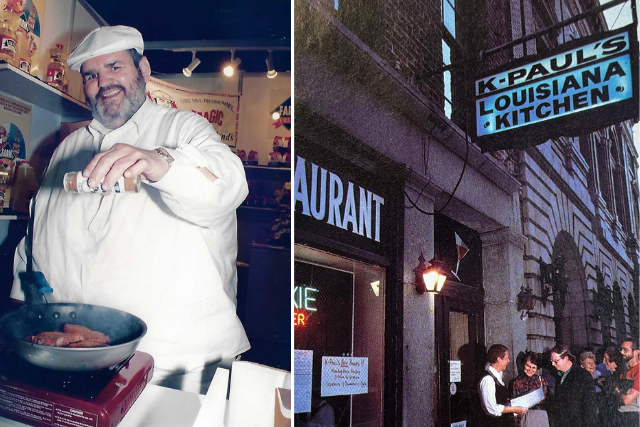
Much of that magic came down to seasoning. Long before most American kitchens thought much beyond salt and pepper, Chef Paul was building deep, complex flavor into every dish, treating his spice blends as the heart of the plate rather than an afterthought.
It didn’t take long before diners began to ask the same question.
“What is this? What kind of seasoning is on my fish, shrimp and chicken?”
A Little Piece of the Magic
True to character, Chef Paul didn’t guard his secrets — he shared them. He would wrap small portions of his spice mixtures in aluminum foil and send diners home with a little piece of his magic.
What began as a few packets a night quickly grew into dozens, then hundreds. The demand answered its own question: people didn’t just want to eat his food — they wanted to cook with what made it sing.
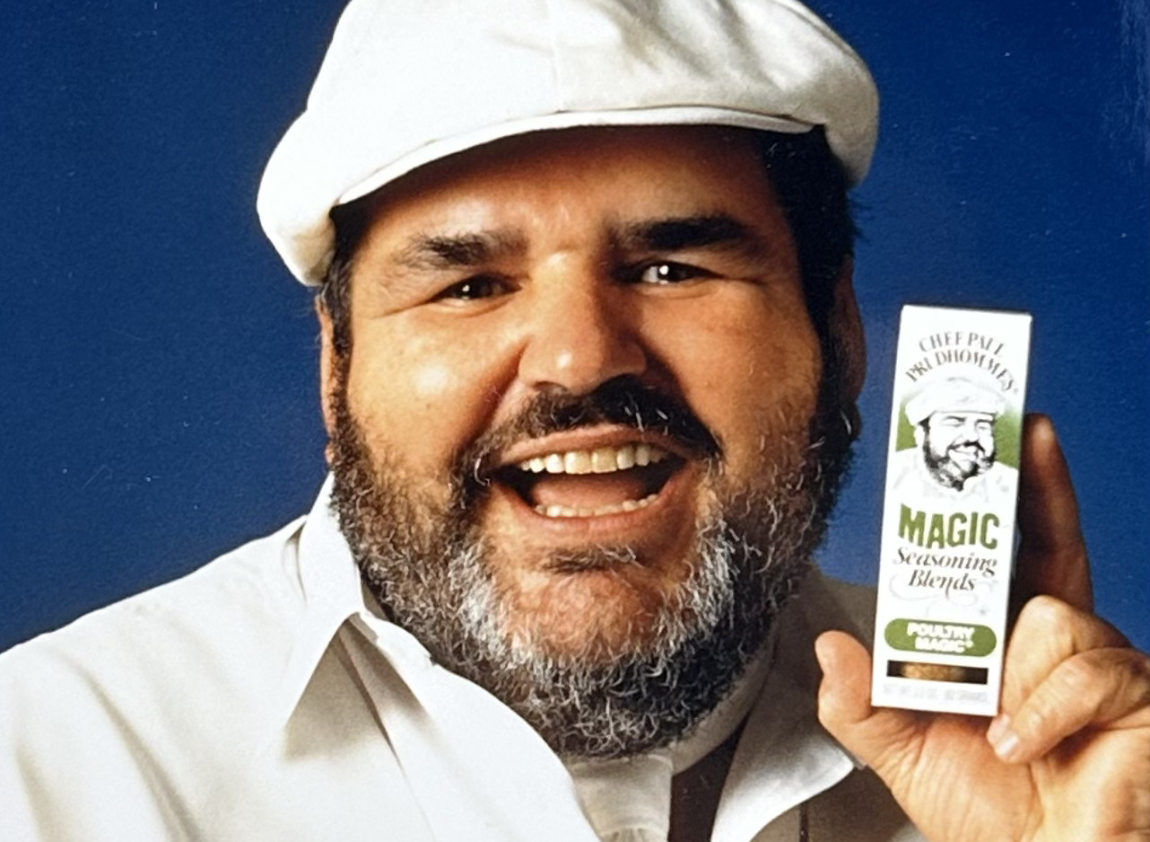
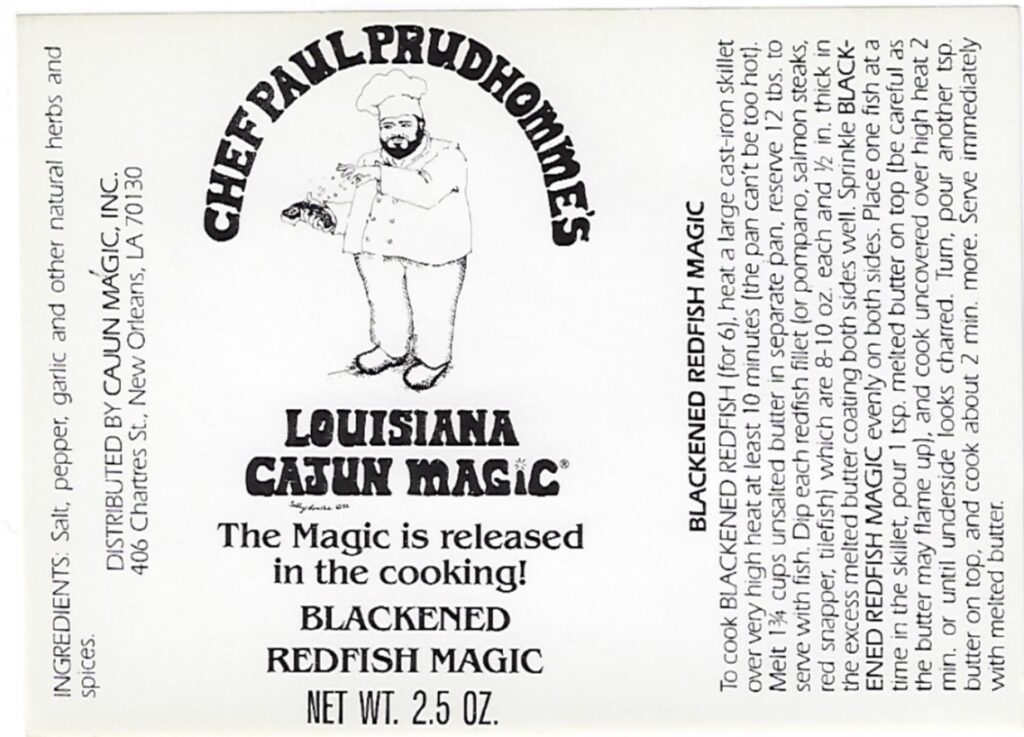
By 1983, that demand became Magic Seasoning Blends — originally called Louisiana Cajun Magic — and from the beginning, Chef Paul refused to let it become just another celebrity product line.
A Philosophy Built on Quality and Instinct
Behind the blends was a philosophy rooted in sourcing and instinct. Chef Paul insisted on starting with the highest quality herbs and spices, the same discipline he applied in his restaurant kitchen. He traveled to find growers and producers whose ingredients met his standards, tasting as he went and accepting nothing less than exceptional.
That insistence on quality was deeply personal. It came from growing up on a farm outside Opelousas, Louisiana, where his family cultivated nearly everything they ate, harvesting at peak flavor.
“In his own way, Chef Paul could determine the quality of the ingredients based on where it was grown due to soil conditions, when it was harvested and how they were stored,” says Magic Seasonings CEO and President Marty Cosgrove, who started with Chef Paul back in 1991 at K-Paul’s restaurant.
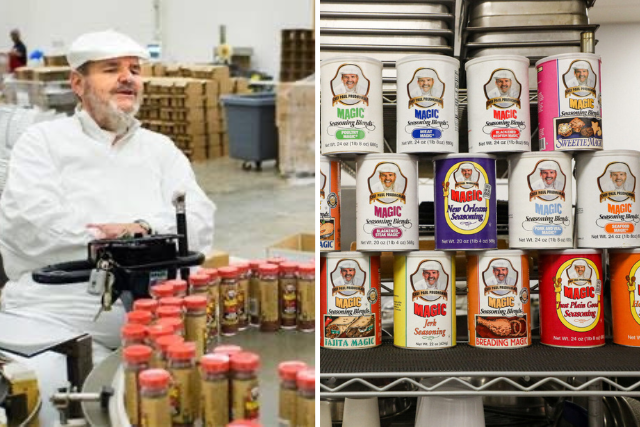
“Then basically, it was trial and error, but in Chef Paul’s case, it was like a kid in the candy store. He just mixed, tasted, cooked with the blend,” says Cosgrove.
Every formulation went through intense refinement. “If it tasted good, it was a winner. If not, he started all over again,” Cosgrove says. Some blends — such as Pizza and Pasta — were one and done. Others required repeated rounds of testing before reaching approval.
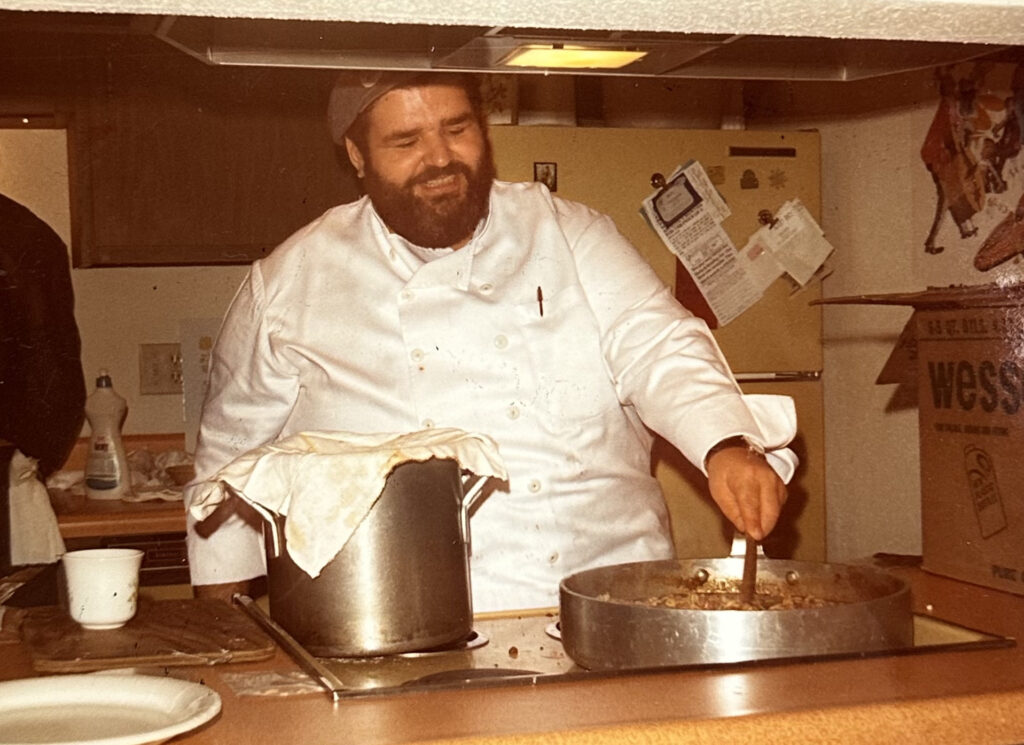
The experimentation process often took place in Chef Paul’s own home test kitchen. A camera was mounted from the ceiling to document every step of blending and formulation.
Even though detailed notes were taken throughout, the recordings provided something essential.
“The beauty of having the camera was that we could go back and look at the footage,” said Cosgrove. “So we didn’t have to adjust the mixture.”
That combination of documentation and instinct reflected how seriously Chef Paul approached flavor.
Behind it all was a palate that colleagues describe as extraordinary — precise enough to detect differences most people would never notice, and disciplined enough to trust those instincts completely.
He evaluated ingredients not just by taste, but by structure and behavior. Color, granulation, particle size — all of it mattered. He understood how ingredients interacted, how blending order could change outcomes, and how consistency affected shelf life and performance over time.
Today, that same rigor remains in place. Every blend is reviewed by multiple levels of blending supervisors before final approval by the company’s Quality Assurance (QA) department.
“Chef Paul always approached his formulas and blends as a way to engage, not overwhelm it,” adds Cosgrove. “His palate was incredible. It’s like giving an artist a blank canvas and a palette of paints with a one word request: ‘create.’”
A Blend for Every Purpose
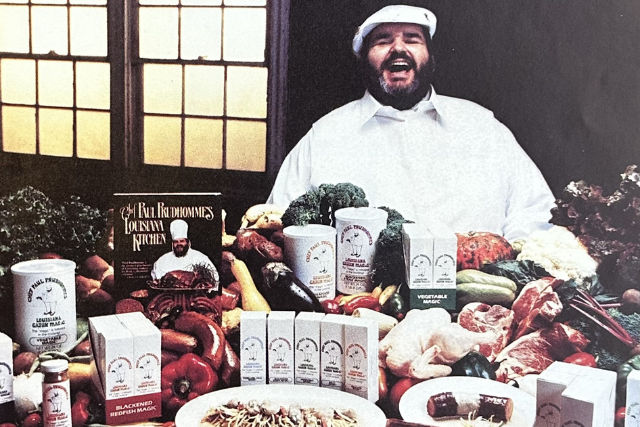
What set the blends apart most was their purpose-driven design. The original seven — Poultry Magic, Meat Magic, Seafood Magic, Vegetable Magic, Blackened Redfish Magic, Pork and Veal Magic, and Blackened Steak Magic — were not interchangeable.
Each was crafted for a specific protein, carefully calibrated to enhance rather than mask the natural flavor of the dish. In a market where “one blend fits all” was the norm, this level of specificity was unusual — and intentional.
Even formulation standards reflected his philosophy. While many commercial seasoning blends rely heavily on salt as a filler — sometimes as much as 90 percent — Chef Paul’s blends averaged only about 40 percent salt, with the remainder made up of premium herbs, spices, and dried vegetables.
The goal was always the same: let flavor do the work.
From those early foil-wrapped packets, Magic Seasoning Blends grew into a global enterprise. Today, the products are used in home kitchens and professional kitchens across all 50 states and more than 40 countries.
The scale changed. The philosophy did not.
Every blend still reflects the same principle Chef Paul shared across the tables at K-Paul’s — that seasoning, built from quality ingredients and careful attention, can transform a dish from good to unforgettable.
“Quality gets all,” Chef Paul often said.
And in every jar of Magic Seasoning Blends, the legacy of Chef Paul Prudhomme continues to speak for itself.